
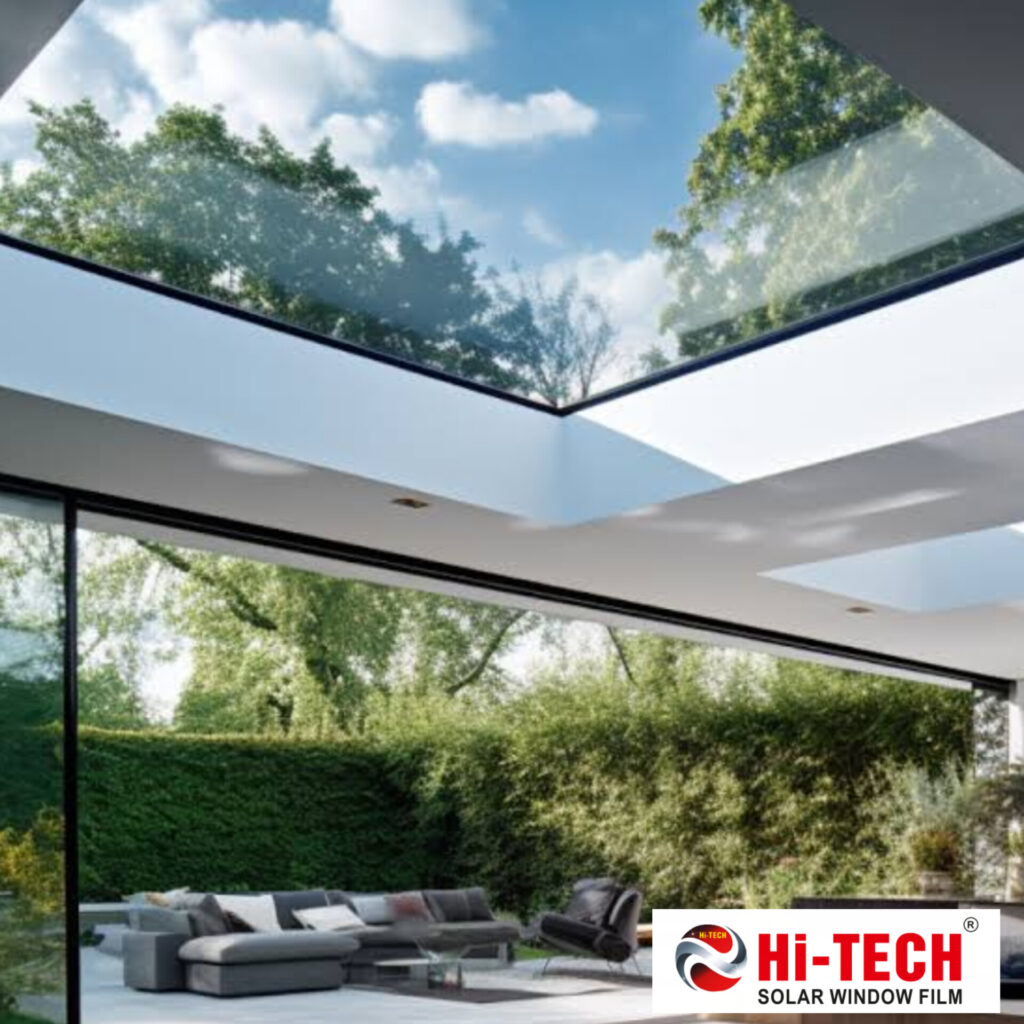
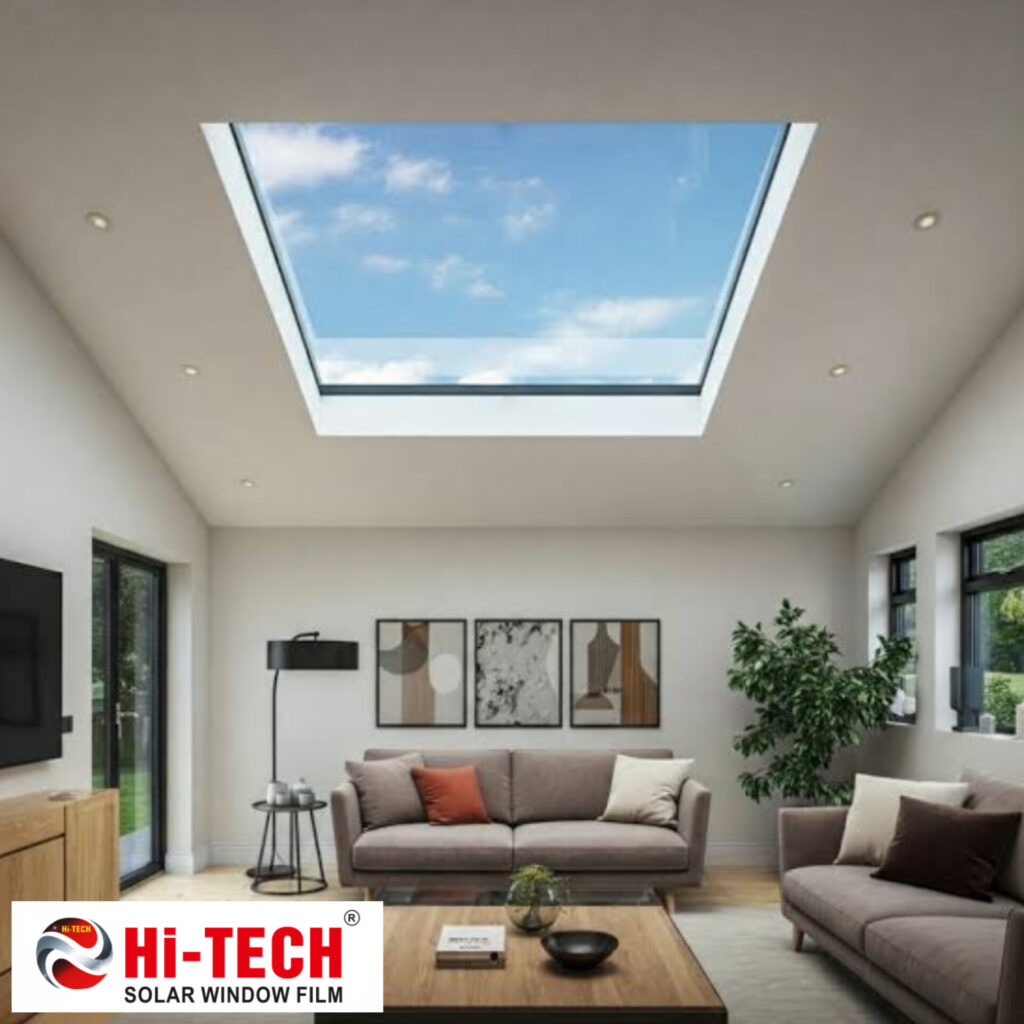
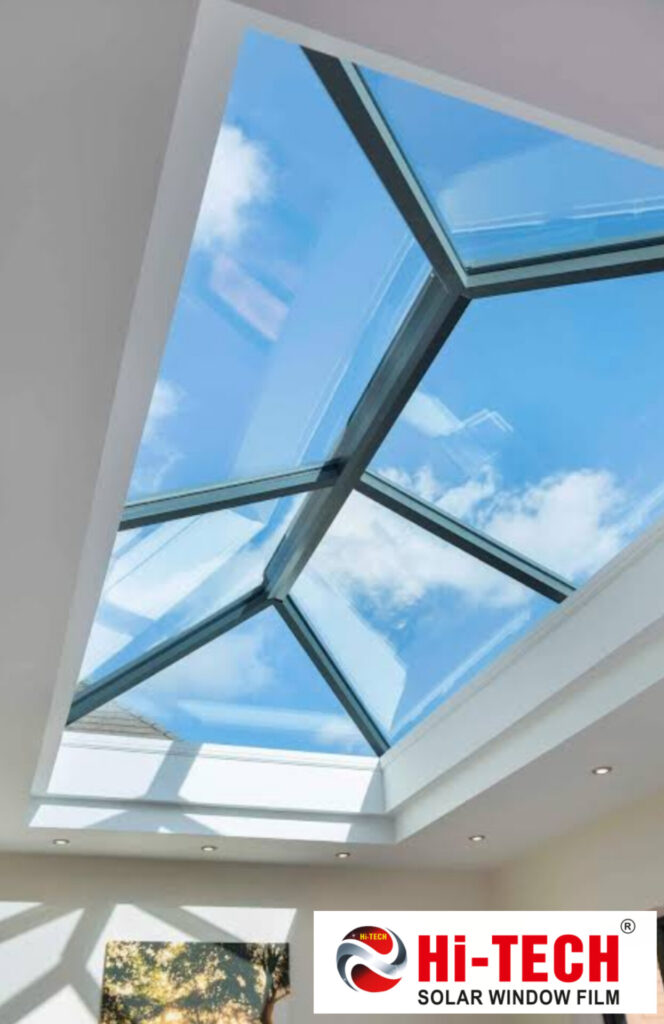
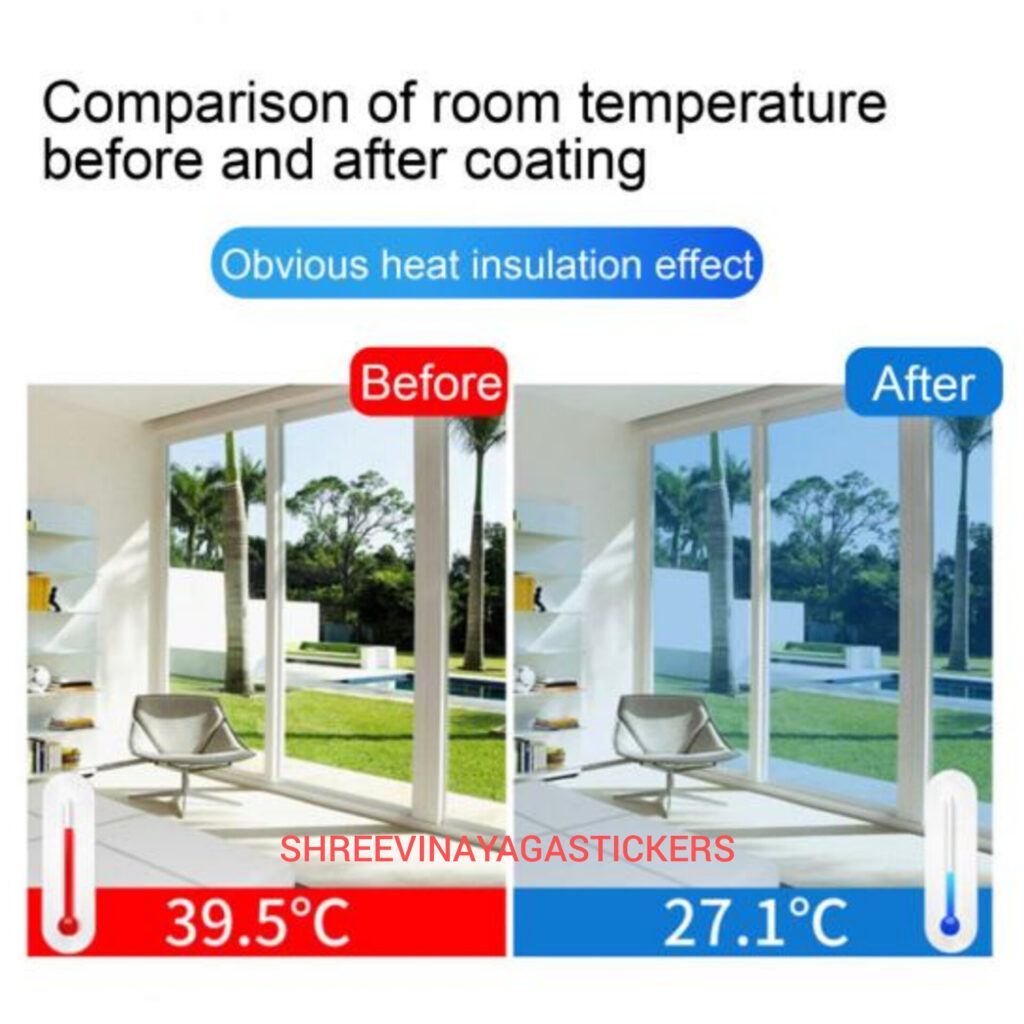
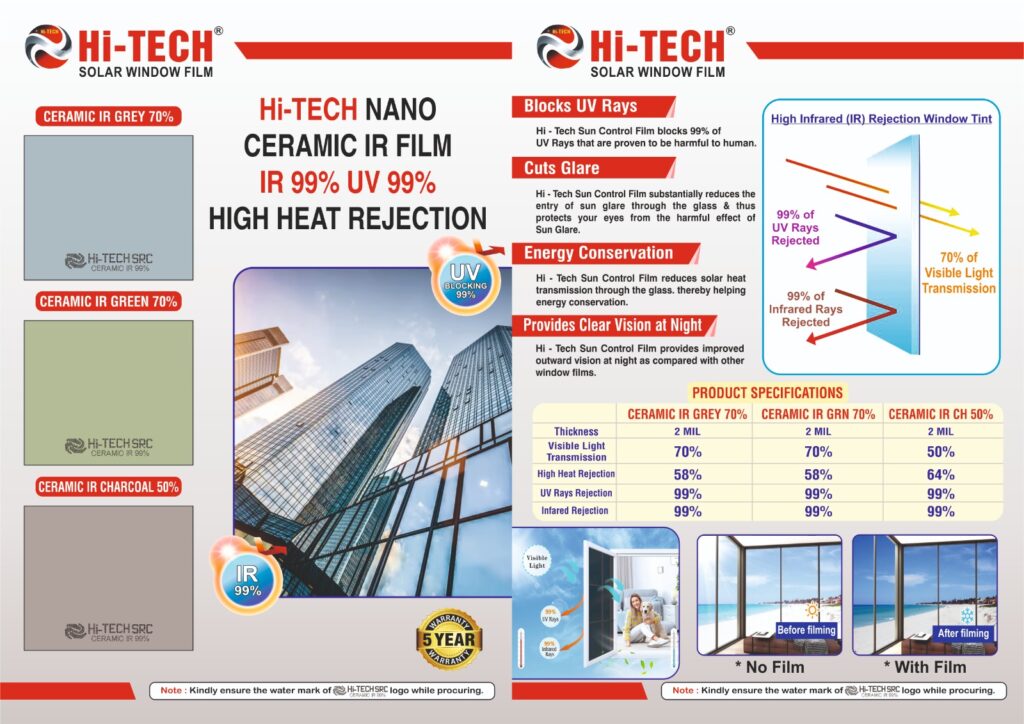
Sun control window films for building roofs (sunrooms, skylights) are applied to existing glass surfaces to reduce heat gain, block harmful UV rays, and control glare. These films help enhance comfort and energy efficiency without blocking natural light or obstructing the view.
Key Benefits
- Heat Reduction: These films reject a significant amount of the sun’s infrared (heat-producing) light, keeping interior spaces cooler and potentially lowering cooling costs.
- UV Protection: Most sun control films block up to 99% of damaging UV rays, which helps prevent the fading and damage of interior furnishings, flooring, and decor.
- Glare Control: Films reduce harsh glare, making the space more comfortable for working or relaxing, especially in areas with large glass surfaces or skylights.
- Safety and Security: Some specialized films can hold shattered glass together in case of accidental breakage, natural disasters, or break-ins, reducing the risk of injury from flying glass shards.
- Aesthetics and Privacy: Films are available in various tints, styles (e.g., reflective, neutral, frosted), and finishes, allowing for enhanced privacy or decorative effects.
Types of Sun Control Films
Films are typically made from materials like PET or PVC and utilize different technologies to achieve their benefits.
- Reflective Films: These films have a mirrored or metallic finish that reflects sunlight away from the building.
- Ceramic Films: Using nano-ceramic technology, these non-metalized films offer high heat rejection without interfering with mobile devices, GPS, or satellite radio signals.
- Spectrally Selective Films: These advanced films let in a high amount of visible light while selectively blocking a significant percentage of heat-producing infrared light.
- Daylight Redirecting Film: Some films use micro-replication technology to cast natural light deeper into a building’s interior, reducing the need for artificial lighting.
Application & Installation
Films are typically installed by professionals who apply them directly to the interior surface of the existing glass. The process involves thoroughly cleaning the glass, applying a slip solution, placing the film, and squeegeeing out any bubbles and excess solution. The adhesive then needs a short curing time to bond properly with the glass.
Brands like HI-TECH 3M India and Garware Hi-Tech Films offer a wide range of products for architectural and automotive use.